

'/%3e%3crect%20x='42'%20y='42'%20width='428'%20height='428'%20rx='104'%20stroke='rgba(255,255,255,0.12)'%20stroke-width='2'/%3e%3cpath%20d='M144%20160H228V244H144V160Z'%20fill='%230B1220'%20stroke='%2334D399'%20stroke-width='18'/%3e%3cpath%20d='M284%20160H368V244H284V160Z'%20fill='%230B1220'%20stroke='%23F59E0B'%20stroke-width='18'/%3e%3cpath%20d='M144%20300H228V384H144V300Z'%20fill='%230B1220'%20stroke='%23F59E0B'%20stroke-width='18'/%3e%3cpath%20d='M284%20300H368V384H284V300Z'%20fill='%230B1220'%20stroke='%2334D399'%20stroke-width='18'/%3e%3cpath%20d='M228%20202H284'%20stroke='url(%23ctxpm-accent)'%20stroke-width='20'%20stroke-linecap='round'/%3e%3cpath%20d='M256%20244V300'%20stroke='url(%23ctxpm-accent)'%20stroke-width='20'%20stroke-linecap='round'/%3e%3ccircle%20cx='256'%20cy='272'%20r='28'%20fill='%230F172A'%20stroke='url(%23ctxpm-accent)'%20stroke-width='18'/%3e%3c/svg%3e)
Bear. CTXPM
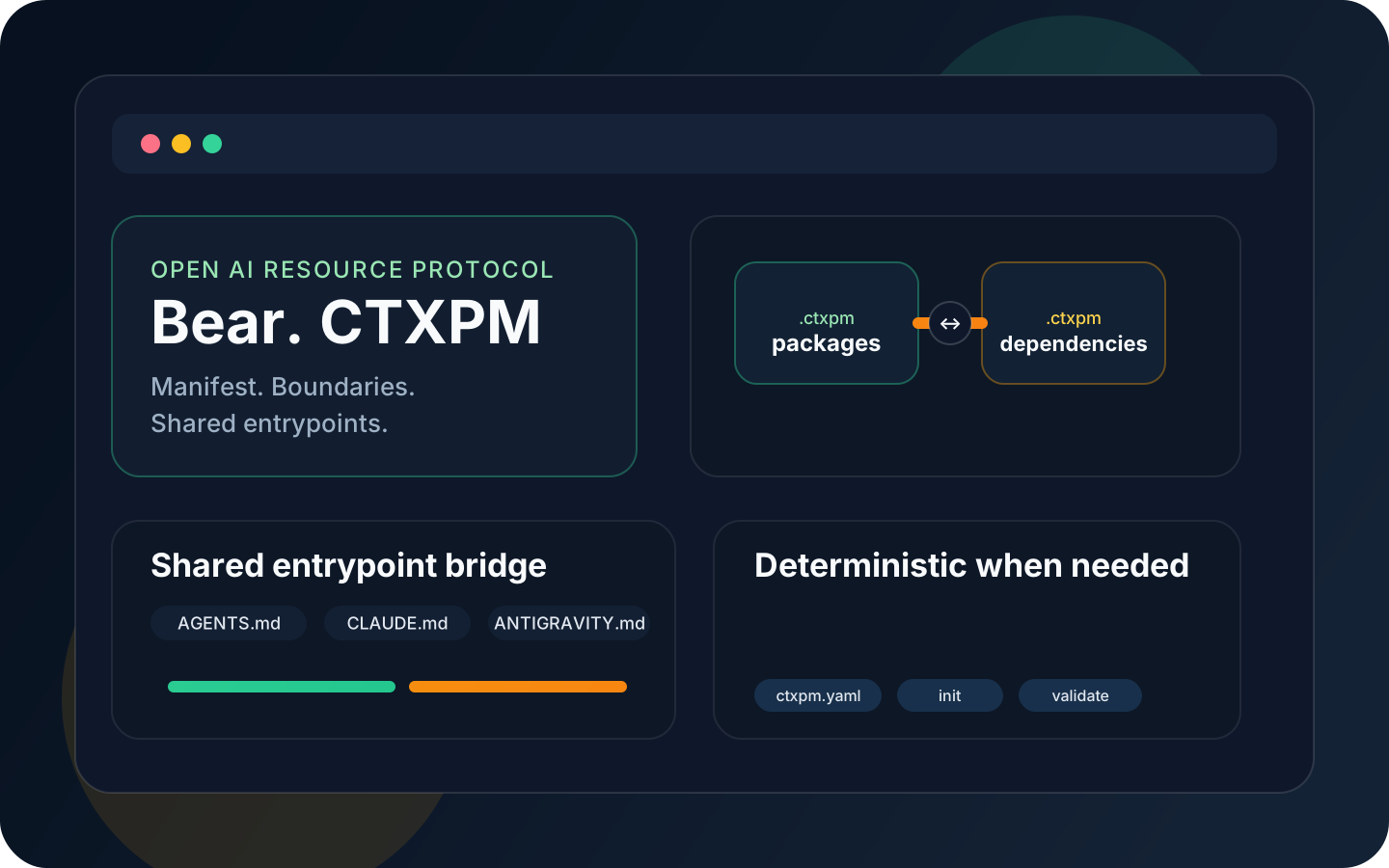
Projects collect external Skills and Rules alongside their own AI resources. CTXPM separates them with a manifest and clear ownership, so agents can handle checks, upgrades, and validation.
Key Features
Bear. CTXPM
A project often depends on external Skills and Rules while also growing its own AI resources. CTXPM separates the two with one manifest, two ownership models, and a shared root entrypoint: external resources stay dependency-like, project resources keep evolving in the repo, and checks, upgrades, and validation are handled by AI that has read the protocol.
One-line Installation Instruction for AI Agents
Hand the instruction below to your Agent and it can inspect, install, initialize, and reorganize the current project into a CTXPM-compatible structure.
Please follow the instructions in https://raw.githubusercontent.com/gBearBest/Bear.CTXPM/latest/INSTALL.md to inspect, install, initialize, and refactor this project into a Bear.CTXPM-compliant structure for managing AI dependencies and resources.How it differs from a typical tooling-first approach
External AI resources shouldn't be committed alongside project source code — that's the problem it started from.
Separate external resources first
Decide what's a dependency and what's a package. External AI resources should be managed like node_modules, not committed into the repo.
External resources stay in the manifest, not the codebase
ctxpm.yaml records the source, version, and entrypoints of external AI resources so they install and update like dependencies, version-controlled separately from project files.
Only project-owned resources evolve with the repo
Skills, Rules, Prompts, Memories, and MCP resources from the project's own logic stay in the repo as packages, versioned and reviewed like source code.
AI-driven-first, tooling handles the repetition
The protocol lives in agent entrypoint docs. AI decides on its own when to check for updates or validate the manifest between coding and review; fixed steps go to the local CTXPM CLI, and only ownership and upgrade decisions need your sign-off.
Migrate without rewriting everything
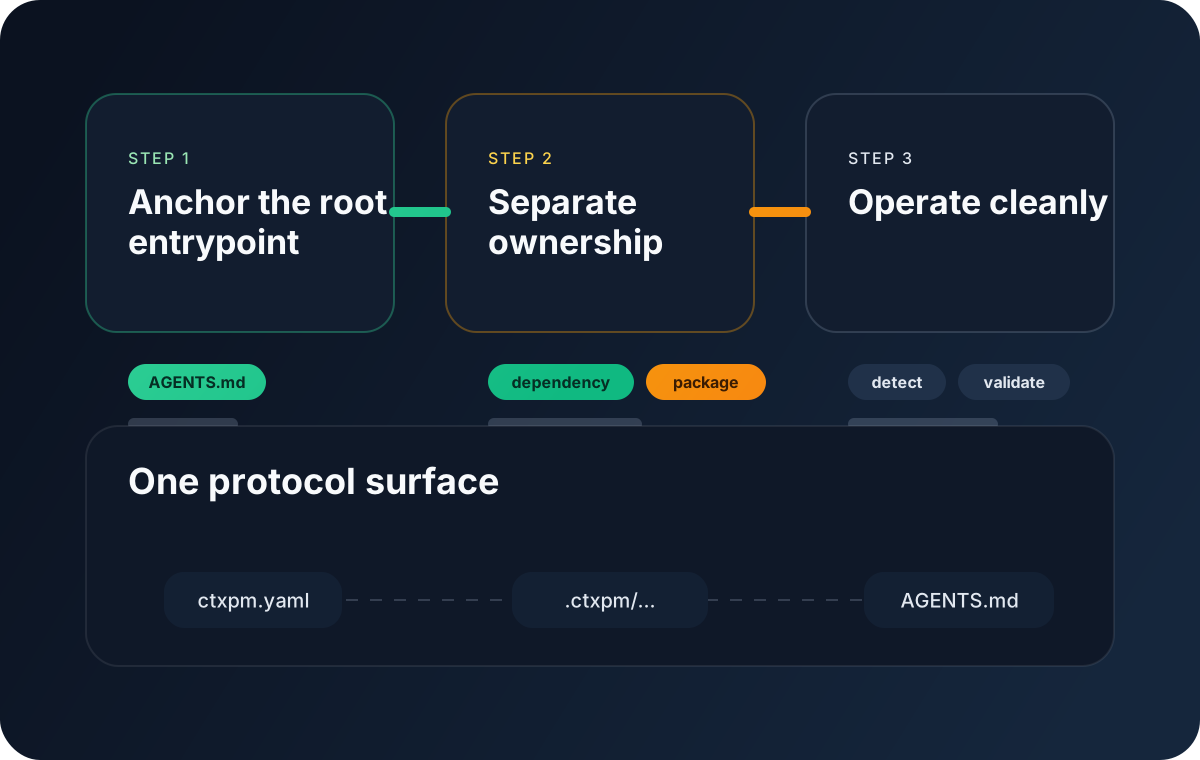
Hand INSTALL.md to AI and it migrates the project into the CTXPM structure, organizing external and internal resources while staying compatible with existing Agents and native discovery.
1. Hand INSTALL.md to AI
AI inspects, installs, and initializes from the project's current state — no need to rewrite the structure by hand first.
2. Sort external and internal resources automatically
External Skills and Rules become dependencies, project-owned resources become packages, and the two layers stop getting mixed together.
3. Seamlessly support existing Agents
The migrated structure stays compatible with existing Agents and is easier for native Agents to discover resources in. Standardized flows go to the local CTXPM CLI for consistency.
What AI handles, what you decide
With CTXPM in place, day-to-day resource maintenance is mostly handled by AI — you only step in for the key decisions.
AI handles autonomously
- Scan the project for unmanaged AI resources.
- Read ctxpm.yaml to understand resource ownership and dependencies.
- Check external dependencies for updates at the right moments.
- Repair entrypoint symlinks to keep the directory structure consistent.
- Load resources by priority to avoid wasting context.
External Git dependencies track the last commit that touched the resource's path, not the repo's latest HEAD, so unrelated changes elsewhere in a large upstream repo don't trigger a false upgrade.
You only need to decide
- Should a stray resource move into packages, or be marked as a dependency?
- Should you upgrade when a new version of an external dependency is available?
- Which version wins when rules conflict?
A structure AI can actually understand
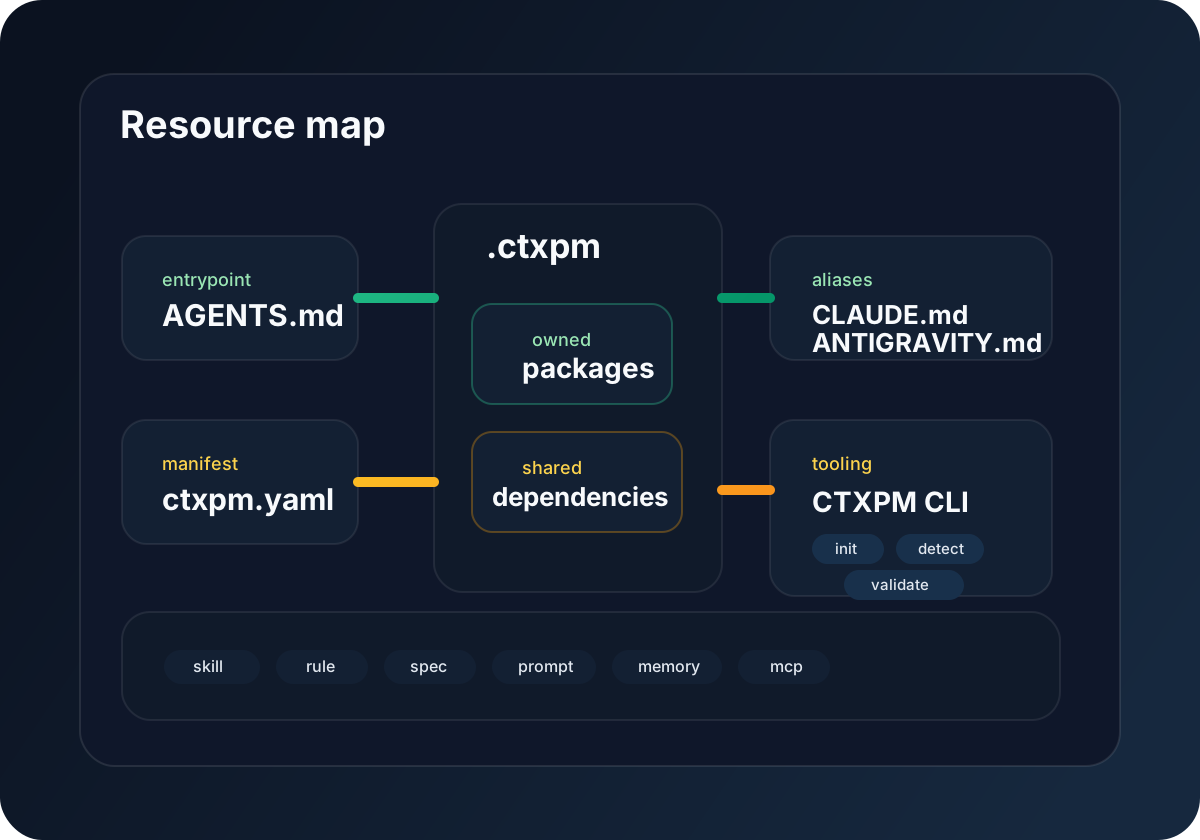
Folder layout, manifest declarations, and compatibility entrypoints share one convention, so humans and AI end up with the same mental model.
Manifest and filesystem stay aligned
ctxpm.yaml declares resources, while .ctxpm/packages and .ctxpm/dependencies keep the workspace structure readable.
Entrypoint bridging is explicit
The canonical AGENTS.md content serves multiple Agents through root-entry aliases, no copy-pasted duplicates needed.
Ownership boundaries stay visible
What belongs to the project, what comes from outside, and what should enter version control all stay visible, not blurred together.
Designed for real AI dependencies in real projects
A repo that depends on external AI resources while steadily growing its own gets the most value from this structure.
- External shared AI resources get declared as clearly as node_modules, not mixed into everyday commits.
- Project-owned Skill, Rule, Prompt, Memory, and MCP configuration enters version control just like source code.
- AGENTS.md, CLAUDE.md, and other root entrypoints bridge to the same shared instructions, no duplicates to maintain.
- AI works from the protocol first; the local CTXPM CLI takes over once bootstrap and maintenance steps are worth standardizing.
Protocol first, CLI second
Its core value is a long-lived convention AI can understand and execute even before any dedicated executable exists.
Only commit what belongs in the repo
Project-owned AI assets stop getting mixed in with external resources that should stay dependency-like.
Portable across Agents
The same repo presents one consistent resource convention to Codex, Claude Code, Antigravity, or a generic workflow.
Bring order to the AI layer of your repo
Start with the README and INSTALL guide. The protocol grows with the AI resources in your project.
Please follow the instructions in https://raw.githubusercontent.com/gBearBest/Bear.CTXPM/latest/INSTALL.md to inspect, install, initialize, and refactor this project into a Bear.CTXPM-compliant structure for managing AI dependencies and resources.